
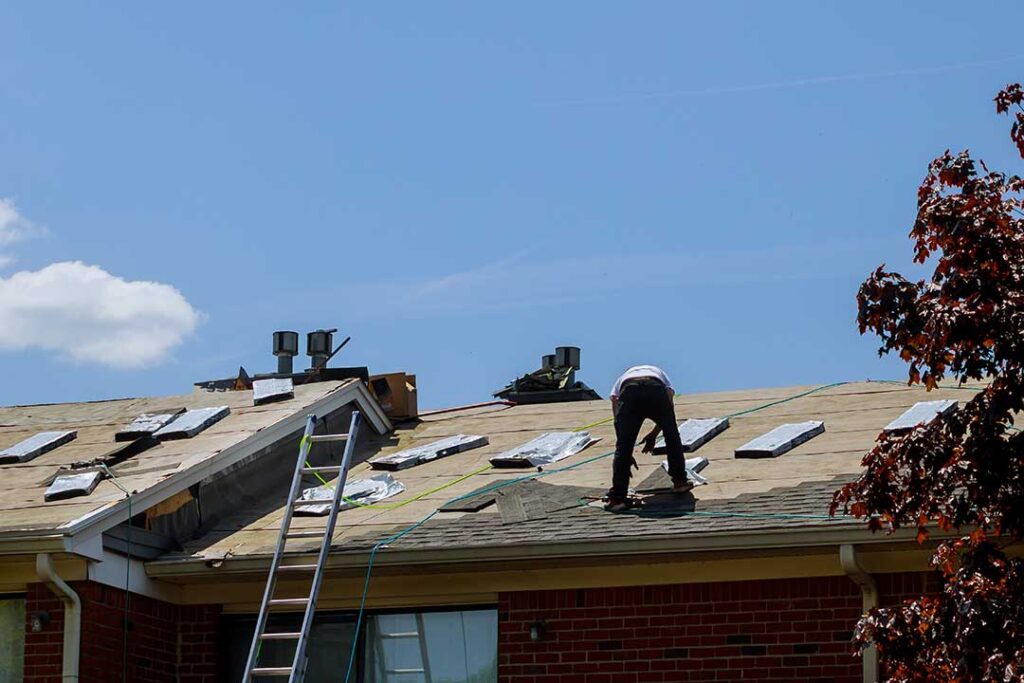
What early roof damage usually looks like
Early roof damage is often subtle. A few lifted shingles, a small ceiling stain, or granules collecting near a downspout may appear minor, but these signs can indicate that water is beginning to move beneath the roof covering.
For households in Livonia, NY, regular observation is especially useful because roofs must withstand snow, ice, wind, heavy rain, and repeated freeze-thaw cycles. Damage may develop gradually after winter weather or appear suddenly after a strong storm.
A basic roof check does not require climbing onto the roof. Many useful clues can be found from the ground, inside the attic, or in upper-level rooms.
Which signs can be seen from the ground?
Several warning signs are visible without using a ladder. Walk around the home occasionally and look at the roofline from different angles, especially after high winds or a severe storm.
Look for:
- Shingles that are missing, cracked, curled, buckled, or visibly raised
- Dark patches that appear different from the surrounding roof surface
- Exposed underlayment or bare sections where shingles should be
- Sagging along the roofline or between support points
- Metal flashing that appears loose, bent, or separated
- Damaged areas around chimneys, vents, skylights, and other roof openings
- Shingle pieces, roofing nails, or granules lying beneath roof edges or in driveway areas
A small amount of loose granule material can be normal, particularly on a newer roof. A noticeable increase in granules, especially after rain, may indicate that the protective surface of the shingles is wearing away.
Sagging deserves prompt attention because it may indicate trapped moisture, weakened decking, or a structural problem. It is not simply a cosmetic issue.
What should homeowners check inside the house?
Interior evidence can reveal a roof leak before the roof itself looks obviously damaged. Inspect ceilings and upper-floor walls for yellow, brown, or gray stains. Pay attention to areas near exterior walls, chimneys, attic access panels, and roof penetrations.
Other interior signs include:
- Fresh paint bubbling or peeling on a ceiling
- Discolored drywall
- Damp or musty odors
- Soft spots in ceiling materials
- Water marks that grow after rain or melting snow
- Dripping or damp insulation in the attic
- Daylight visible through the roof boards
A stain does not always appear directly below the point where water enters. Roof leaks can travel along rafters, roof decking, insulation, and framing before becoming visible indoors. For that reason, tracing a ceiling mark by location alone can be misleading.
A stain that remains unchanged may come from an older leak, condensation, or another moisture source. A stain that expands, feels damp, or returns after precipitation should be treated as an active warning.
Why is the attic worth inspecting?
The attic often provides the clearest early evidence of roof trouble. Inspect it during daylight hours, but do not step between floor joists unless solid decking is present. Use a flashlight and observe from a safe position.
Check for:
- Wet or compressed insulation
- Darkened wood around roof penetrations
- Mold-like surface growth caused by persistent moisture
- Rust on nails, fasteners, or metal components
- Water trails on rafters or roof sheathing
- Damp wood or a strong musty smell
- Frost on the underside of the roof deck during cold weather
- Blocked or inadequate ventilation openings
Not every attic moisture problem comes from a roof leak. Warm household air can enter a poorly sealed attic and condense on cold roof surfaces. Bathroom fans that discharge into the attic, rather than outdoors, can add substantial moisture. The pattern matters: isolated wet areas may suggest leakage, while widespread frost or condensation may point toward ventilation or air-sealing concerns.
What damage often follows snow, ice, and wind?
Winter weather can expose weaknesses that were not noticeable in warmer months. Heavy snow adds weight, while ice can collect near roof edges and interfere with drainage. Repeated freezing and thawing may enlarge small cracks around flashing, masonry, or roofing materials.
After a storm, look for:
- Shingles displaced in the direction of prevailing wind
- Branch impact marks or punctures
- Bent vents or damaged flashing
- Ice buildup that pulls at gutters or fascia
- Water stains that appear during thawing
- Debris lodged in roof valleys or behind roof features

Ice along the roof edge is not automatically proof of a leak. However, recurring ice buildup combined with attic frost, interior stains, or leaking at the eaves deserves investigation. Removing ice with sharp tools can damage shingles and create additional openings.
Tree branches should also be considered. Even a small fallen limb can loosen shingles or damage the underlayment without creating an immediate interior leak. Water entry may become noticeable only during the next heavy rain.
Are gutters and downspouts connected to roof damage?
Yes. Drainage problems can contribute to water damage even when the roof covering itself appears intact.
Gutters filled with leaves, shingle granules, or compacted debris can cause water to back up beneath the roof edge. Downspouts that discharge too close to the foundation may also contribute to basement or crawl-space moisture, although that is separate from a roof leak.
During or shortly after rainfall, observe whether water:
- Runs behind the gutter
- Spills over the front edge
- Pools near roof valleys
- Drips from a single joint
- Stops flowing through a downspout
- Leaves dark streaks on fascia or siding
Gutters that pull away from the roofline may indicate excess snow and ice load, deteriorated fascia, or fastener failure. These conditions should be corrected before they contribute to larger roof-edge problems.
Which warning signs require prompt attention?
A roof concern becomes more urgent when water is actively entering the home, structural materials are sagging, or electrical components may be exposed to moisture.
Prompt attention is warranted for:
- Active dripping during rain or snowmelt
- A rapidly expanding ceiling stain
- Sagging roof decking or interior ceilings
- Exposed wiring near a wet area
- Large sections of missing shingles
- A fallen tree limb or major storm impact
- Water entering around a chimney, skylight, or attic vent
If water is near a light fixture, electrical outlet, or wiring, avoid touching the wet area and use appropriate caution with the affected circuit. Severe structural damage or unsafe roof conditions should not be investigated by climbing onto the roof.
How often should a roof be checked?
A visual check is useful twice each year, commonly in spring and fall, with additional checks after major wind, hail, heavy snow, or ice events. A glance from the ground after a storm can identify missing materials before the next rainfall.
Keep simple records of unusual findings, including the date, location, weather conditions, and whether a stain or damaged area changes over time. Photographs taken from a safe position can help distinguish a new problem from an older mark.
Early roof damage is easier to manage when it is identified before moisture reaches insulation, framing, ceilings, and interior finishes. In a climate with snow, wind, rain, and frequent temperature changes, small observations around the home can provide valuable warning well before a serious leak develops.
